
Zero Lost Frames: Overcoming Autonomous Vision Bottlenecks at VISION 2026
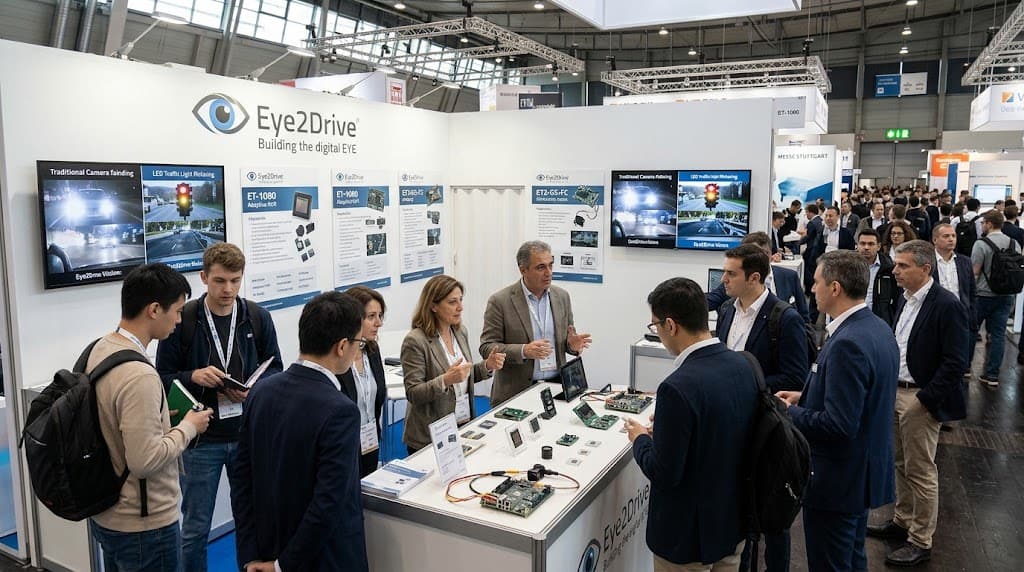
Our team recently returned from the VISION 2026 trade fair in Stuttgart, where the global machine vision community gathered to evaluate the next generation of image processing technologies. Engaging with system integrators, computer vision engineers, and product managers confirmed a critical industry consensus: while artificial intelligence software continues to advance rapidly, conventional vision hardware remains a significant bottleneck for autonomous systems.
Hardware Bottlenecks Throughout the exhibition, conversations repeatedly turned to the persistent vulnerabilities of standard CMOS sensors. Traditional systems rely on software intensive multi frame processing to handle high dynamic range environments. This approach introduces computational latency and frequently results in motion ghosting when tracking fast moving objects. Furthermore, standard cameras are notoriously susceptible to blinding light transitions and LED flickering, which compromise the reliability of the visual data fed to perception algorithms. For applications ranging from industrial robotics to driverless vehicles, these blind spots present unacceptable safety and operational risks.
Bio Inspired Silicon At the Eye2Drive booth, we demonstrated how shifting complexity from software to silicon directly addresses these industry pain points. As a fabless semiconductor company, we develop bio inspired CMOS image sensors designed specifically for the autonomous navigation market. By mimicking the human eye, our technology performs adaptive high dynamic range processing natively at the hardware level. This allows the sensor to adjust sensitivity frame by frame, capturing clear details in both deep shadows and glaring sunlight simultaneously.
Our current product lineup directly targets the diverse needs of the autonomy sector. The ET 1080 sensor provides high resolution capabilities tailored for static or slow environments and detailed inspection tasks. For high speed applications, the ET2 GS FC sensor utilizes a global shutter architecture to eliminate motion distortion during rapid maneuvers. Both sensors are natively immune to LED flickering and ghosting artifacts, ensuring that downstream algorithms receive clean and accurate data.
Native Neural Integration The most resonant theme from our Stuttgart meetings was the urgent need for hardware that seamlessly integrates with modern neural networks. Eye2Drive sensors are explicitly designed to be artificial intelligence ready. Rather than acting as passive data collectors, our architecture allows artificial intelligence algorithms to tune the sensor input parameters dynamically and in real time. This structural integration maximizes image quality for feature extraction while significantly reducing the computational payload on downstream processors.
Sensor Fusion Strategy While LiDAR and radar technologies remain highly effective for distance and velocity measurements, their high costs and lower resolution limit their scalability across all autonomous platforms. Eye2Drive vision sensors provide the rich, high fidelity visual data required to complete the perception puzzle, offering a reliable and cost effective cornerstone for sensor fusion architectures. We look forward to continuing our collaborations with industry leaders to deploy these advanced vision subsystems across the mobility and industrial automation landscapes.

Related Posts

Sony and TSMC Erect an Unshakable Silicon Fortress for the Image Sensors Industry

Adaptive Sensors are the Key to True Vehicle Safety
